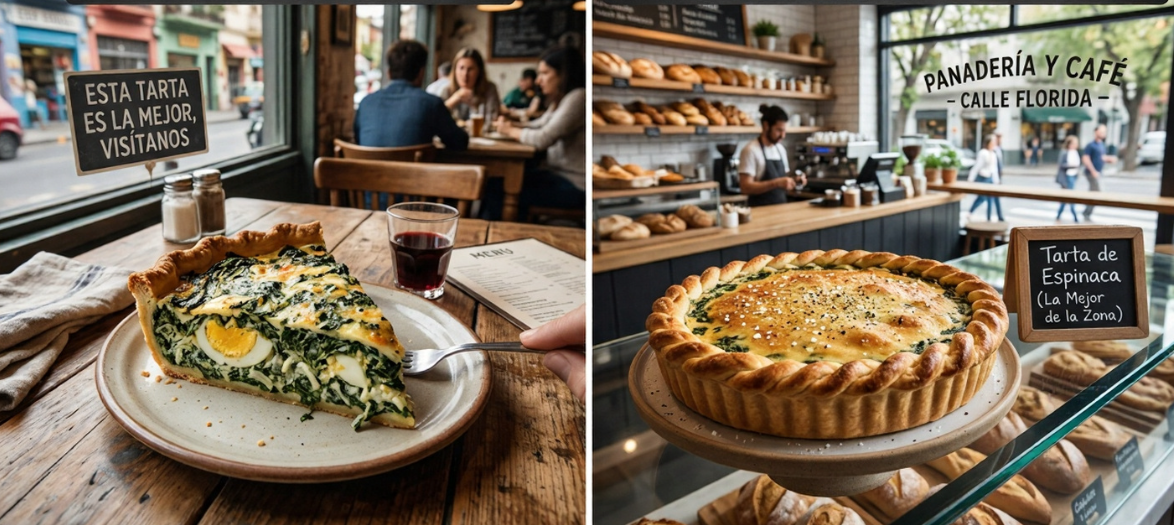
You typed “best tarta de espinaca near me” for a reason. Maybe you had a slice once at a friend’s house, or saw it in a bakery window, and now you can’t stop thinking about that flaky crust and the warm, garlicky spinach filling underneath. Good news: this savory pie is easier to find than people think, once you know what to look for and where to look.
This guide walks you through what tarta de espinaca actually is, what separates a great one from a mediocre one, where to search for it locally, and how to tell (before you even take a bite) whether a bakery or restaurant is likely to do it well.
What Is Tarta de Espinaca, Exactly?
Tarta de espinaca is a Spanish-style savory spinach pie, usually made with a buttery pastry crust (sometimes puff pastry, sometimes a shortcrust) filled with sautéed spinach, onion, garlic, and often cheese or a béchamel-style binder. Some versions add pine nuts and raisins, a nod to the Catalan tradition of pairing spinach with a touch of sweetness. Others keep it simple with just cheese, egg, and spinach, closer to a quiche.
It’s typically served warm or at room temperature, cut into squares or wedges, and works as:
- A tapa or starter
- A light lunch with a side salad
- A picnic or party food, since it holds up well unrefrigerated for a few hours
- A vegetarian option on a mixed tapas board
Because there’s no single “official” recipe, quality varies a lot from bakery to bakery — which is exactly why searching for the best one nearby actually matters.
Why “Near Me” Searches Are Tricky for This Dish
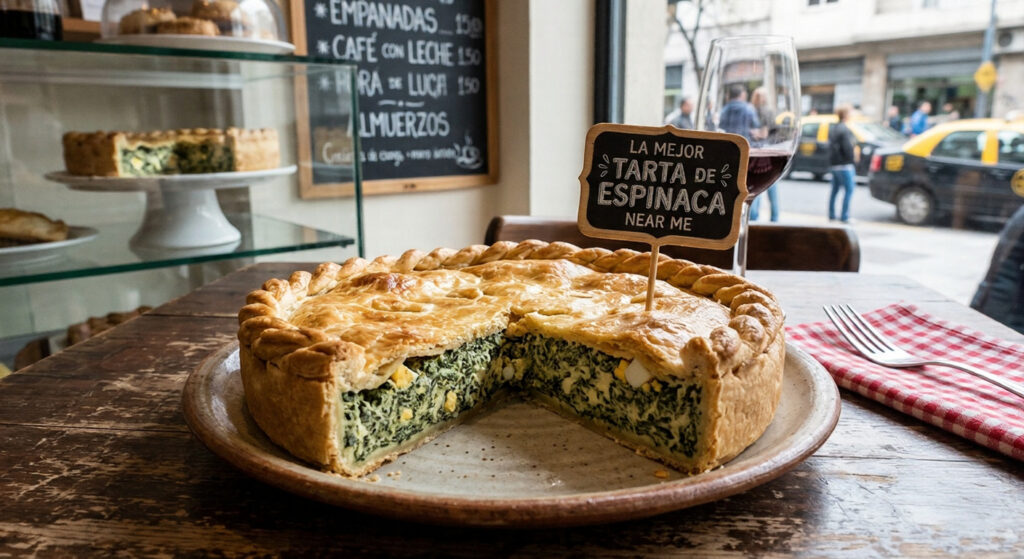
Spinach tart isn’t as universally available as pizza or empanadas, so a simple search often returns a mix of:
- Spanish and Mediterranean bakeries
- Tapas restaurants with it as a rotating special
- Bakeries that carry it seasonally (often more common in colder months)
- Home cooks or small catering businesses selling it through local Facebook groups or farmers markets
That means the “best” one near you might not even have a big online presence. A three-table Spanish café with no website can easily beat a chain bakery’s version.
How to Actually Search for It Locally
Here’s a practical approach that works better than a generic search:
1. Use Specific Search Terms
Instead of just “tarta de espinaca,” try variations like:
- “spinach tart [your city]”
- “Spanish bakery near me”
- “tapas restaurant spinach pie”
- “empanada de espinaca near me” (a related but distinct dish worth trying too)
2. Check Google Maps Reviews, Not Just Ratings
A 4.5-star bakery with 20 reviews mentioning “spinach tart” by name is often a better bet than a 4.8-star place with 2,000 reviews that never mentions it. Search within reviews using keywords when the platform allows it.
3. Ask in Local Food Groups
Neighborhood Facebook groups, Reddit city subreddits, and NextDoor often have better answers than search engines for niche dishes like this, since real locals share honest opinions.
4. Call Ahead
Many small bakeries make tarta de espinaca in limited batches or only on certain days. A quick phone call saves you a wasted trip.
What Makes a Tarta de Espinaca Genuinely Good
Not all spinach tarts are created equal. Here’s what separates a forgettable one from a memorable one:
| Quality Factor | What to Look For | Red Flag |
|---|---|---|
| Crust | Flaky, golden, holds its shape when sliced | Soggy bottom, greasy pastry |
| Spinach | Well-drained, not watery, still has some texture | Mushy, bland, or overly wet filling |
| Seasoning | Garlic, nutmeg, or a hint of onion coming through | Tastes flat or one-note |
| Cheese (if used) | Melted evenly, not overpowering the spinach | Rubbery or excessive cheese masking flavor |
| Freshness | Made same day or previous day, not sitting for a week | Freezer-burnt taste, dry edges |
| Balance | Filling-to-crust ratio feels generous | Mostly crust with a thin spinach layer |
A good rule of thumb from experienced home cooks and bakers: if the filling releases visible liquid when cut, it wasn’t drained properly before baking. That’s one of the most common mistakes, both at home and in commercial kitchens.
Bakery vs. Restaurant vs. Homemade: Which Should You Try First?
Bakeries and Delis
Best for grab-and-go slices, often sold by weight or per piece. Quality tends to be consistent if the bakery specializes in Spanish or Mediterranean food specifically, rather than carrying it as one item among dozens of unrelated pastries.
Tapas Restaurants
Best if you want it fresh and warm, often served as part of a shared plate. The downside is it’s usually not always on the menu — it may rotate seasonally.
Homemade or Local Sellers
Often the most authentic option, especially from someone with Spanish or Latin American family recipes. These are harder to find through search engines but worth the extra effort of asking around.
A Quick Note on Related Dishes
If your search for tarta de espinaca near you comes up short, it’s worth knowing about close relatives that might satisfy the same craving:
- Empanada de espinaca – a handheld, pastry-wrapped version, easier to find at Latin American bakeries
- Spanakopita – the Greek cousin, using phyllo dough instead of shortcrust or puff pastry
- Spinach quiche – common at French-style cafés, similar filling with a custard base
None of these are identical to tarta de espinaca, but they’re close enough that a place serving one often serves or can make the other.
Can You Make It Yourself If You Can’t Find It?
If a local search doesn’t turn up anything promising, making it at home isn’t difficult. A basic version needs:
- Frozen or fresh spinach, thoroughly drained
- Sautéed onion and garlic
- A binder like egg, ricotta, or béchamel
- Store-bought puff pastry or shortcrust (this alone saves most of the prep time)
Bake at around 375–400°F (190–200°C) until the crust is golden, usually 30–40 minutes depending on the pastry thickness. This isn’t a substitute for finding a great local version, but it’s a reliable backup when nothing nearby fits the bill.
ALSO READ: Second Step A Practical Guide for Parents and Teachers
Final Thoughts
Finding the best tarta de espinaca near you usually comes down to looking past generic search results and checking smaller Spanish bakeries, tapas spots, and local community recommendations. The dish rewards patience — a good one, with a crisp crust and well-seasoned spinach filling, is worth the extra effort of asking around or making a phone call before you go. And if your search comes up empty, it’s a genuinely approachable dish to make at home while you keep looking.
FAQs
What does tarta de espinaca taste like?
It has a savory, slightly earthy flavor from the spinach, balanced by garlic, onion, and often a mild cheese. Some versions include a subtle sweetness from raisins or pine nuts, which is common in Catalan-style recipes.
Is tarta de espinaca served hot or cold?
Both. It’s commonly served warm right out of the oven, but it also tastes good at room temperature, which makes it convenient for picnics, potlucks, or make-ahead meals.
Where is tarta de espinaca most commonly found?
It’s most reliably found at Spanish or Mediterranean bakeries, tapas restaurants, and delis. Availability depends heavily on your city, since it’s a regional specialty rather than a mainstream menu item.
Is tarta de espinaca vegetarian?
Most versions are vegetarian, since the base is spinach, onion, garlic, and pastry. Some recipes add anchovies or ham, so it’s worth asking if you have dietary restrictions.
Can I freeze tarta de espinaca?
Yes, both baked and unbaked versions freeze reasonably well. For best texture, freeze it before baking, then bake it fresh from frozen, adding extra time to the cook.
How is tarta de espinaca different from spanakopita?
The main difference is the pastry. Tarta de espinaca uses a shortcrust or puff pastry base, while spanakopita uses layered phyllo dough. The fillings are similar but seasoning styles differ slightly by region.
For more updates visit: THE SECOND STEP